
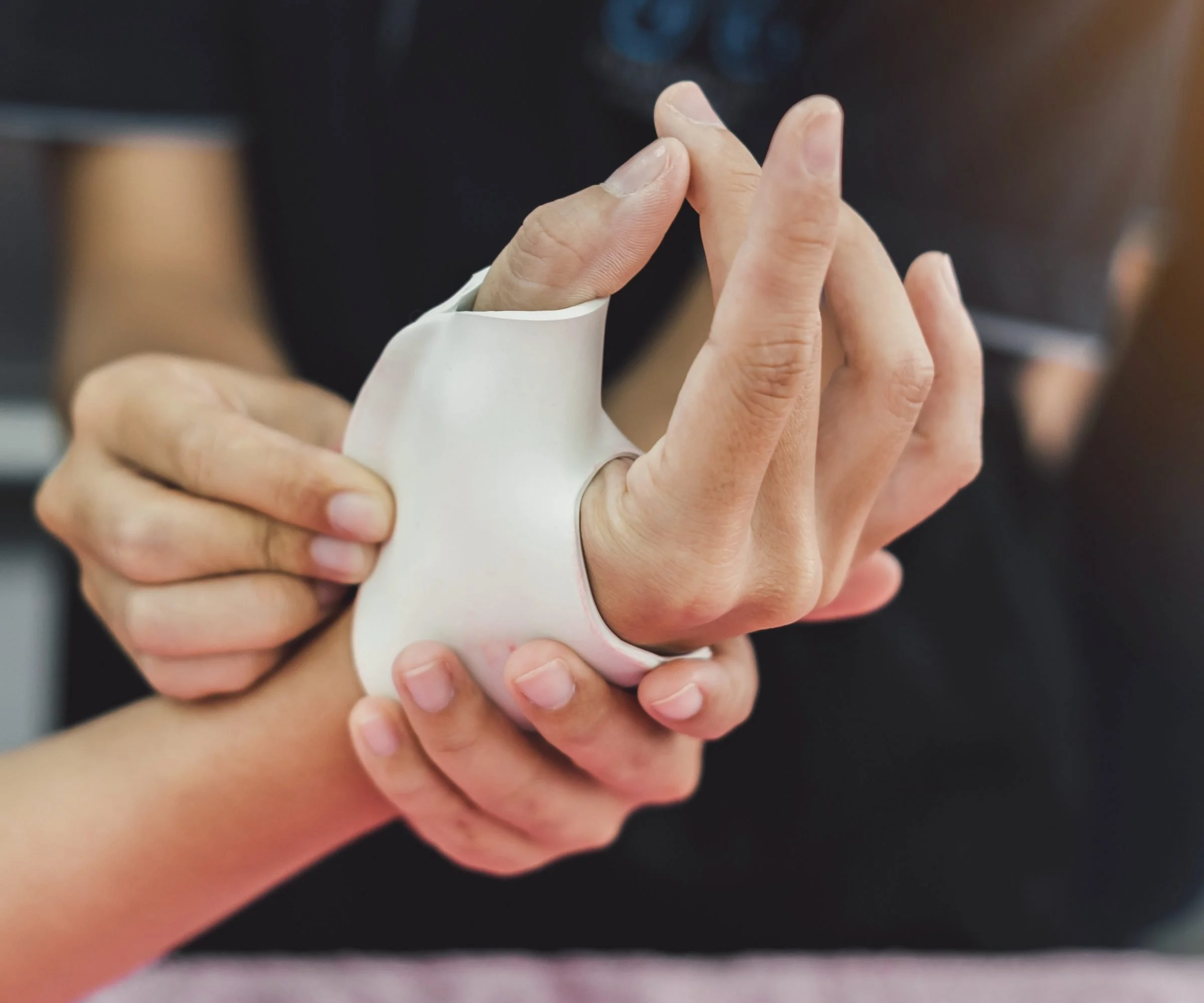
At Peak Physiotherapy Strength & Conditioning, we provide hand therapy and custom splinting for post-operative recovery, fractures, sports injuries, and chronic conditions affecting the hand and wrist. Our physiotherapists work closely with local and visiting specialists, helping you regain strength, movement, and function.
Hand Therapy & Splinting
Common conditions we treat
Post Surgical
Flexor and extensor tendon repairs
Carpal tunnel release
Dupuytren’s contracture release
Joint replacement and fusions
Tendons & Ligaments
Trigger finger
De Quervain’s tenosynovitis
Thumb ligament injuries, including skiers thumb
TFCC injuries
Nerves & Arthritis
Carpal tunnel syndrome
Thumb base arthritis (CMC)
Hand and finger arthritis
Fractures & Dislocations
Wrist fractures (distal radius)
Scaphoid fractures
Finger and hand fractures
finger and hand dislocations
Mallet finger
FAQs
-
Splinting involves fitting a custom support to protect, immobilise, or support the hand or wrist during healing. Splints are often used after surgery, fractures, or tendon injuries to protect the area while allowing safe movement as recovery progresses.
-
This depends on the type of surgery and your surgeon's specific instructions, but hand therapy is often started within the first one to two weeks after surgery. Your surgeon or physiotherapist will advise on the right timing for your procedure.
-
A referral isn't always required, but many patients are referred directly by their surgeon following hand or wrist surgery. If you've had surgery, it's necessary to bring your surgeon's post-operative report to your first appointment. If you're unsure whether you need a referral or report, get in touch and our team can help clarify.
-
We'll assess your hand or wrist, discuss your injury or surgery history, and develop a treatment plan that may include a custom splint made in the clinic, hands-on therapy, and tailored exercises to restore movement and function
-
This varies depending on your injury or surgery and how you progress through recovery. Some conditions need only a few follow-up sessions, while post-surgical or more complex cases may involve an ongoing course of treatment. Your physiotherapist will discuss what's appropriate at your first appointment.